
Blog
Palo Alto - Cortex - Extended Detection and Response
2 July 2024

Extended Detection and Response (XDR)

As the digital landscape witnesses an exponential rise in cyber threats, security professionals are constantly having to renew their defence strategies. One of the most important innovations to emerge in recent years is extended detection and response (XDR). Evolved from its predecessor, endpoint detection and response (EDR), XDR represents a paradigm shift in cyber security by providing a holistic, integrated approach to threat detection, response and mitigation.
Attackers have moved beyond single-vector attacks and now run complex, multi-vector campaigns that exploit vulnerabilities at several points of entry. Older security measures, generally focused on isolated layers of defence, can no longer keep pace with these advanced attacks. XDR closes those gaps by unifying security data and providing real-time analysis, threat detection and rapid response. XDR not only improves an organization's ability to block threats, it also delivers a more streamlined, efficient security operation, freeing up valuable resources that would otherwise be spent on manual investigation and response tasks.
The differences between XDR and traditional security solutions
Traditional solutions generally work in silos, focusing on a specific layer of defence such as endpoint, network or application security. This fragmentation limits their ability to detect coordinated multi-vector attacks and respond to them effectively.
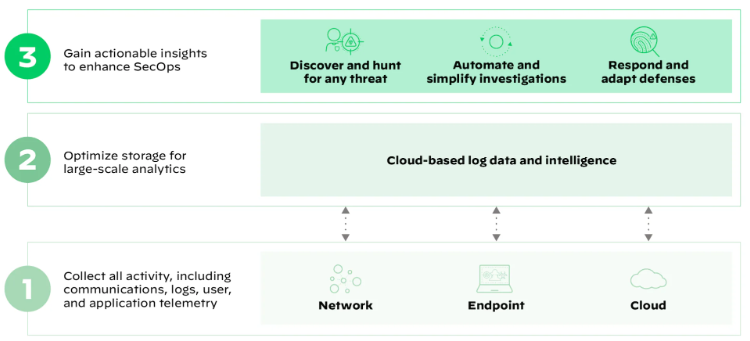
XDR integrates data from multiple sources, including endpoints, networks, cloud environments and applications. This holistic approach provides a broader view of threats and makes it possible to correlate data across different vectors, helping to reveal complex attack patterns that might otherwise go unnoticed.
Traditional solutions rely heavily on manual intervention for threat analysis, investigation and response, which leads to delays in detecting and mitigating attacks.
XDR uses automation and machine learning to detect and respond to threats quickly. Automated playbooks can carry out predefined actions based on threat severity, shortening response time and allowing security teams to focus on more strategic work.
Traditional solutions often lack real-time monitoring capabilities, which makes it difficult to detect and respond to threats the moment they appear.
XDR provides real-time monitoring and continuous threat detection across the entire IT ecosystem. This proactive approach helps identify and block threats at an early stage, minimizing potential damage.
In short, Extended Detection and Response — XDR — is a new approach to threat detection and response that provides holistic protection against cyber attacks, unauthorized access and misuse.